
Personal finance · Android
Spendpedia
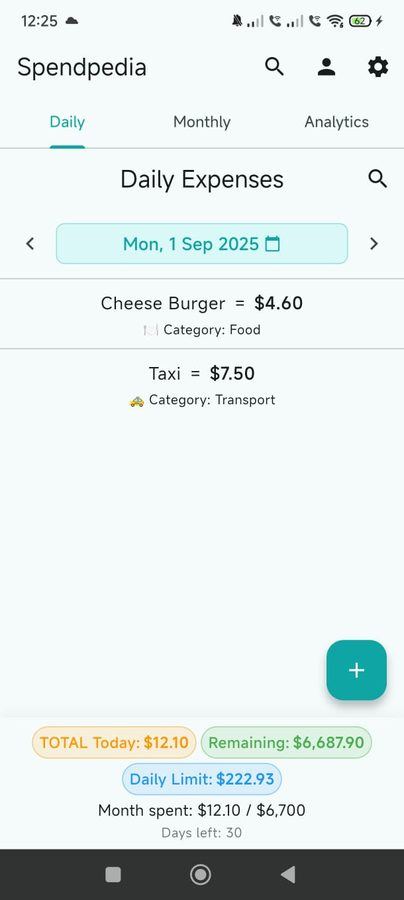
An expense tracker built around the thing that kills every expense tracker: nobody wants to type in what they just spent.
Live on Google Play
The problem
Almost everyone has installed a budgeting app and stopped using it within two weeks. The reason is never the charts. It is that logging a coffee takes six taps, and after the fourth day you stop bothering — and an expense tracker with four days of data in it is worse than none, because it tells you a confidently wrong story.
So the design problem was not analytics. It was reducing the cost of entering a single expense to almost nothing.
What I built
- Voice entry with AI categorisation. Say what you spent and the app parses the amount, guesses the category and files it. The LLM only handles the messy part — turning free speech into structured fields — while the arithmetic stays ordinary code, because a language model should never be the thing adding up someone's money.
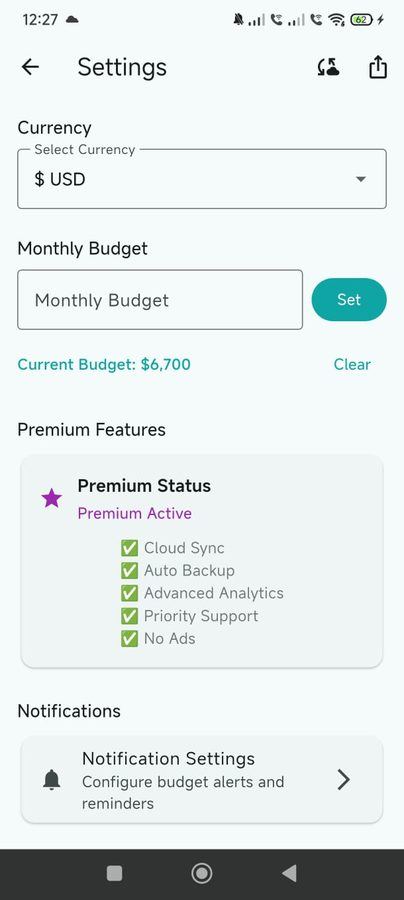
- Budgets that speak up. Monthly limits per category with alerts as you approach them, rather than a report at month end telling you what you already cannot change.
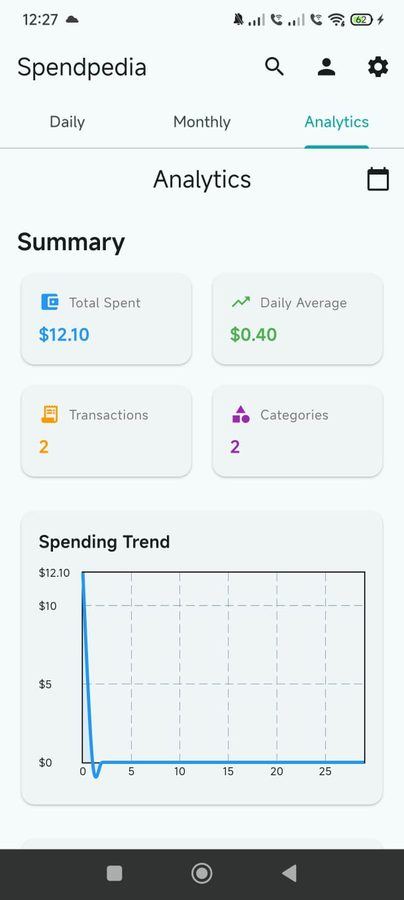
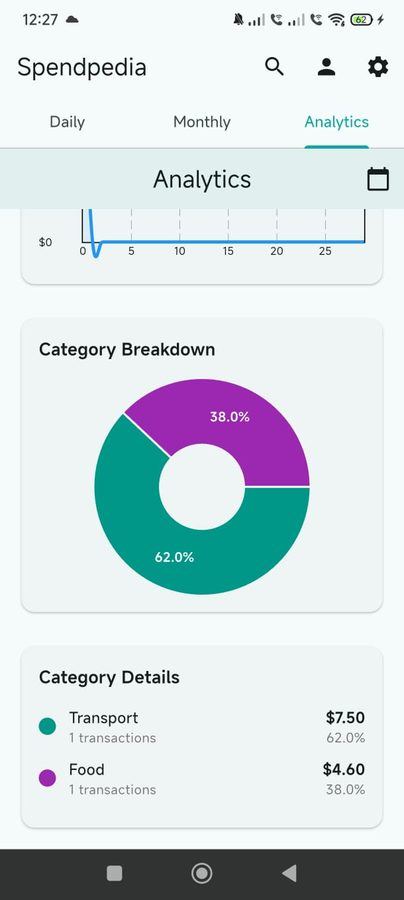
- Analytics worth opening. Category breakdowns and spending patterns over time, which is what turns logging into a habit that pays back.
- Your data stays yours. Encrypted cloud sync across devices, full offline operation, and export to CSV or PDF. No ads.
The part that was actually hard
Financial apps get the strictest treatment on Google Play. The data-safety declaration has to match what the app actually does, field by field, and a mismatch between the form and the binary is a rejection rather than a question.
Offline-first sync is the part people underestimate. The app has to work fully with no connection and then reconcile without ever silently losing or duplicating an entry — because in a finance app, a duplicated entry is not a bug, it is a wrong number the user trusts.
Where it is now
Live on Google Play with a free tier and a premium subscription. The iOS build is in progress. The site carries a budget calculator and a set of personal-finance articles, both aimed at search traffic rather than at existing users.